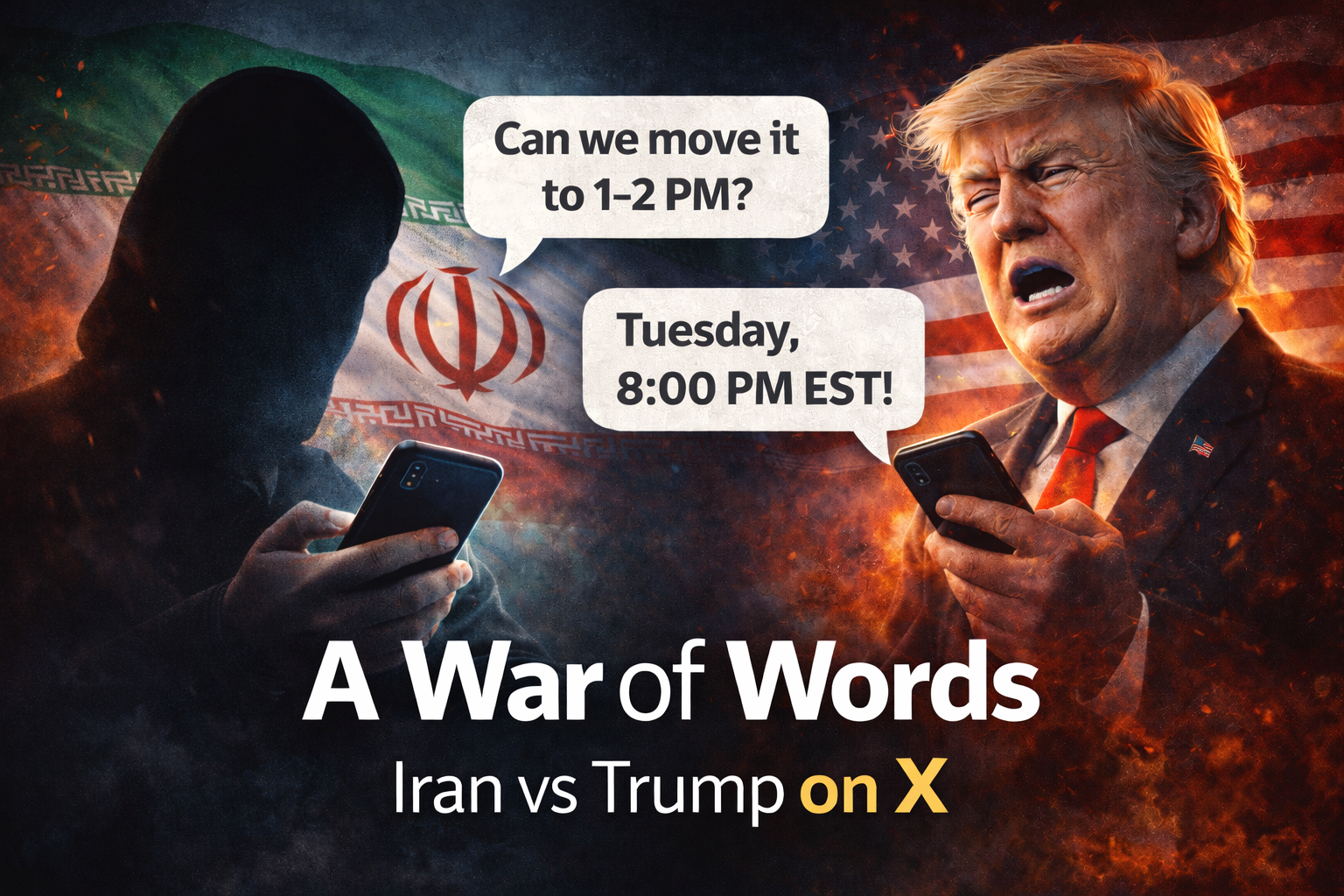
If there is any one event that has caught more eyeballs than the Super Bowl, the World Cup, or even cricket in South Asia, it is the Iran-US conflict. It has taken over global news like nothing else.
Stories, allegations and counter-allegations have been everywhere, especially on X, which has become the most vibrant space for this back-and-forth. In fact, international diplomacy today is literally being played out on social media. Conversations are being hinted at, provoked, and sometimes even conducted there before governments formally say anything through press statements or interviews. X has it first, straight from the horse’s mouth.
And in all of this, there is perhaps nothing more peculiar, more ironical, more interesting, and frankly more hilarious than the way Iran’s government’s social media handles have responded. They have clearly realised that Donald Trump is extremely vocal on social media, especially on his own platform, and sometimes a little too quick for his own benefit, with whatever he says promptly finding its way onto official US channels and wider global discourse.
What has followed is something quite unexpected. Iran’s embassy handles have opened up a completely new front, and that front is X. The style is sharp, often below the belt, full of sarcasm, humour, and a certain irreverence. Instead of responding with outrage to threats of destruction, to statements about wiping out a country in hours, they have chosen to laugh.
And they are not just laughing in theory. They are doing it in plain sight.
When Trump put out one of his trademark dramatic announcements with a precise timeline, “Tuesday, 8:00 P.M. Eastern Time!”, effectively signalling when the United States would move to attack Iran if its demands were not met, the response from the Iranian Embassy in Zimbabwe was not outrage, not denial, not even a counter-threat. It was a polite note saying 8 P.M. was not that good, and could it be shifted to between 1 and 2 P.M., or if possible, 1 and 2 A.M.
Not anger. Not fear. A scheduling request.
That one line does more damage than a dozen press statements. The entire threat is reduced to the level of a calendar inconvenience.
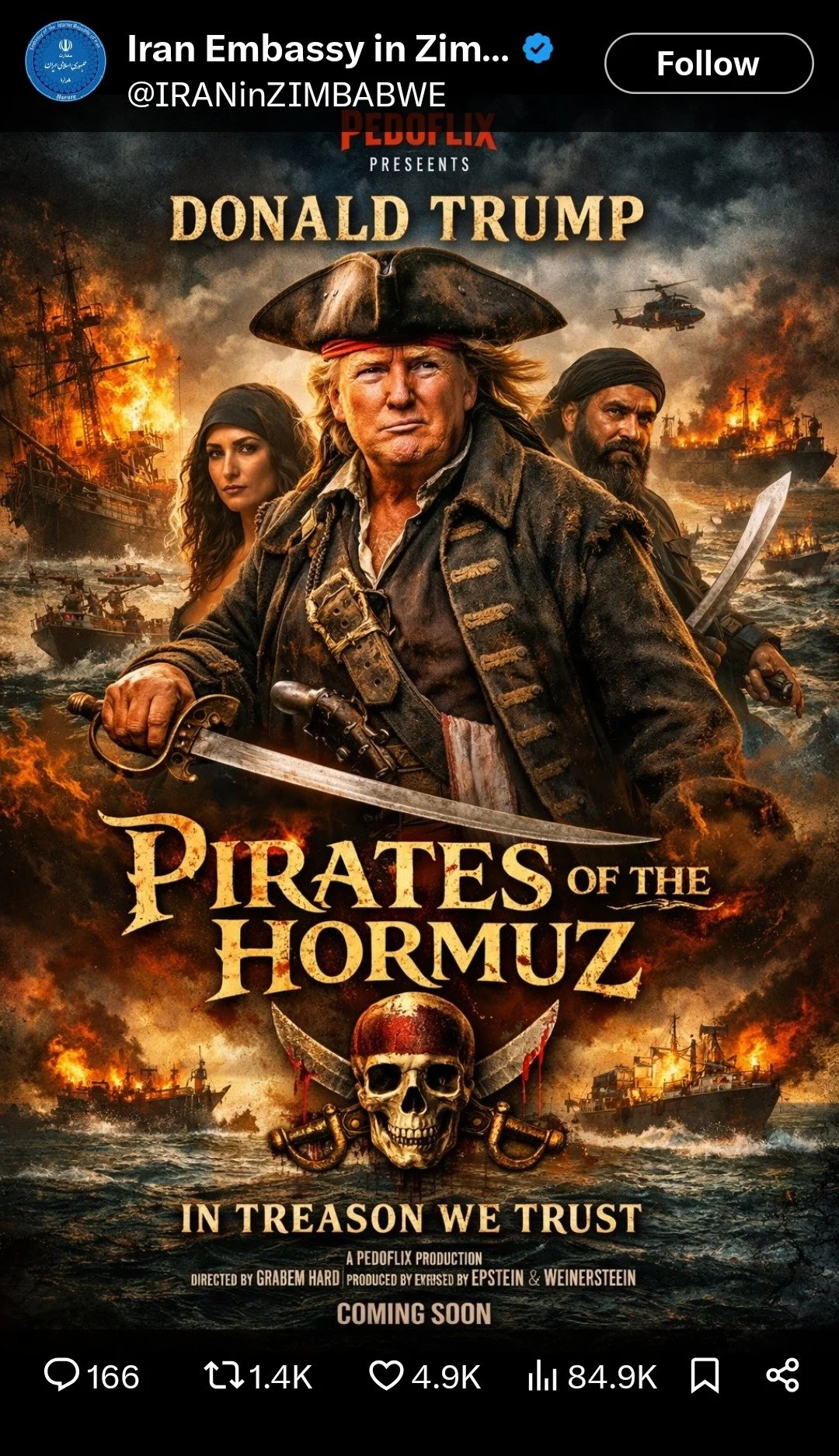
And then it goes a step further. A full-blown cinematic poster appears, “Pirates of the Hormuz”, a clear play on the Pirates of the Caribbean, with Trump cast in a rather dramatic, almost ridiculous role. It is not just humour, it is taking a familiar reference and bending it to make a point. You don’t engage seriously with someone you can turn into a film poster. You shrink them.
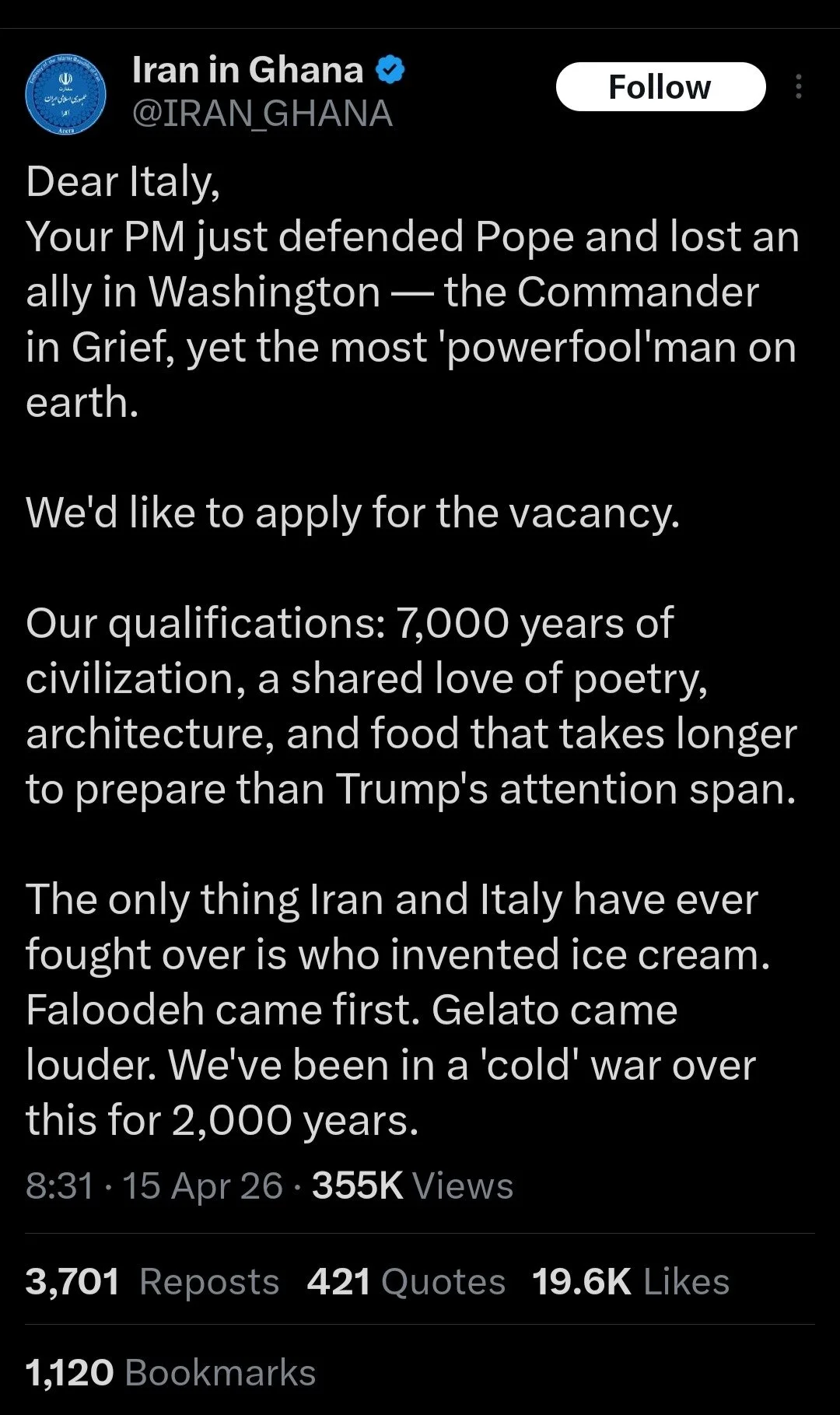
At the same time, there is a completely different layer playing out. The Iranian mission in Ghana writes what looks like a tongue-in-cheek message to Italy, saying they would like to apply for the vacancy after Italy’s Prime Minister defended the Pope and, in their telling, lost favour in Washington. Then comes the line, 7,000 years of civilisation versus Trump’s attention span.
It is funny, yes. But it is also a very clear positioning of who they believe they are in this equation.
And just when it starts looking like a constant stream of jokes, the tone shifts without warning. The same handles that are joking about ice cream wars between falooda and gelato suddenly become measured and respectful when religion enters the conversation. When Trump takes a swipe at the Pope or Christianity, the response from Iran is serious, respectful, almost protective of the institution.
That switch is not accidental. That is control.
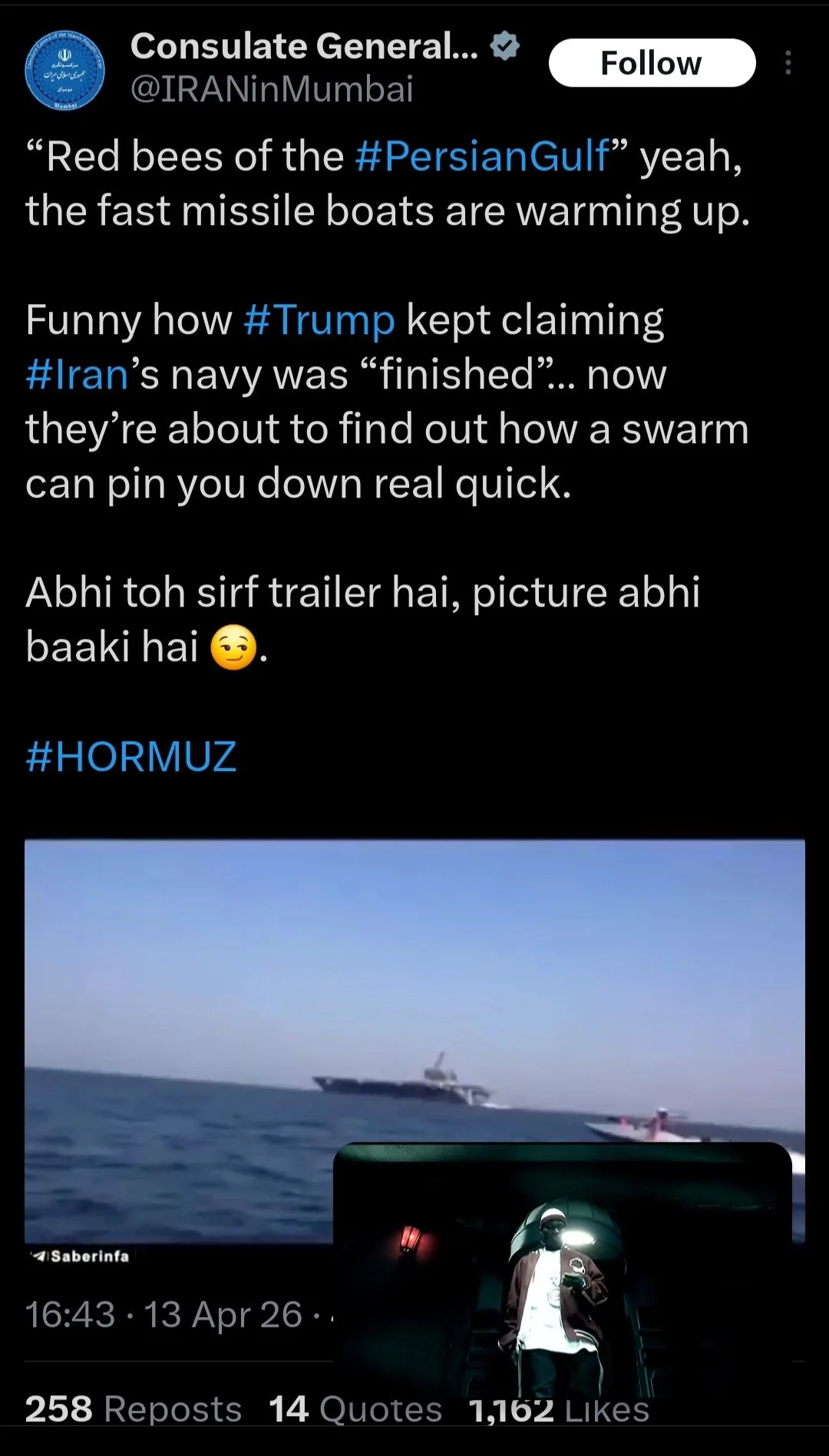
Even in messages that sound more direct, like references to “red bees of the Persian Gulf” or lines like “abhi toh sirf trailer hai, picture abhi baaki hai”, a familiar Bollywood-style line meaning this is just the trailer, the real movie is yet to begin, there is a mix of humour, cultural reference, and a quiet warning. It is not loud, it is not hysterical, but it lands.
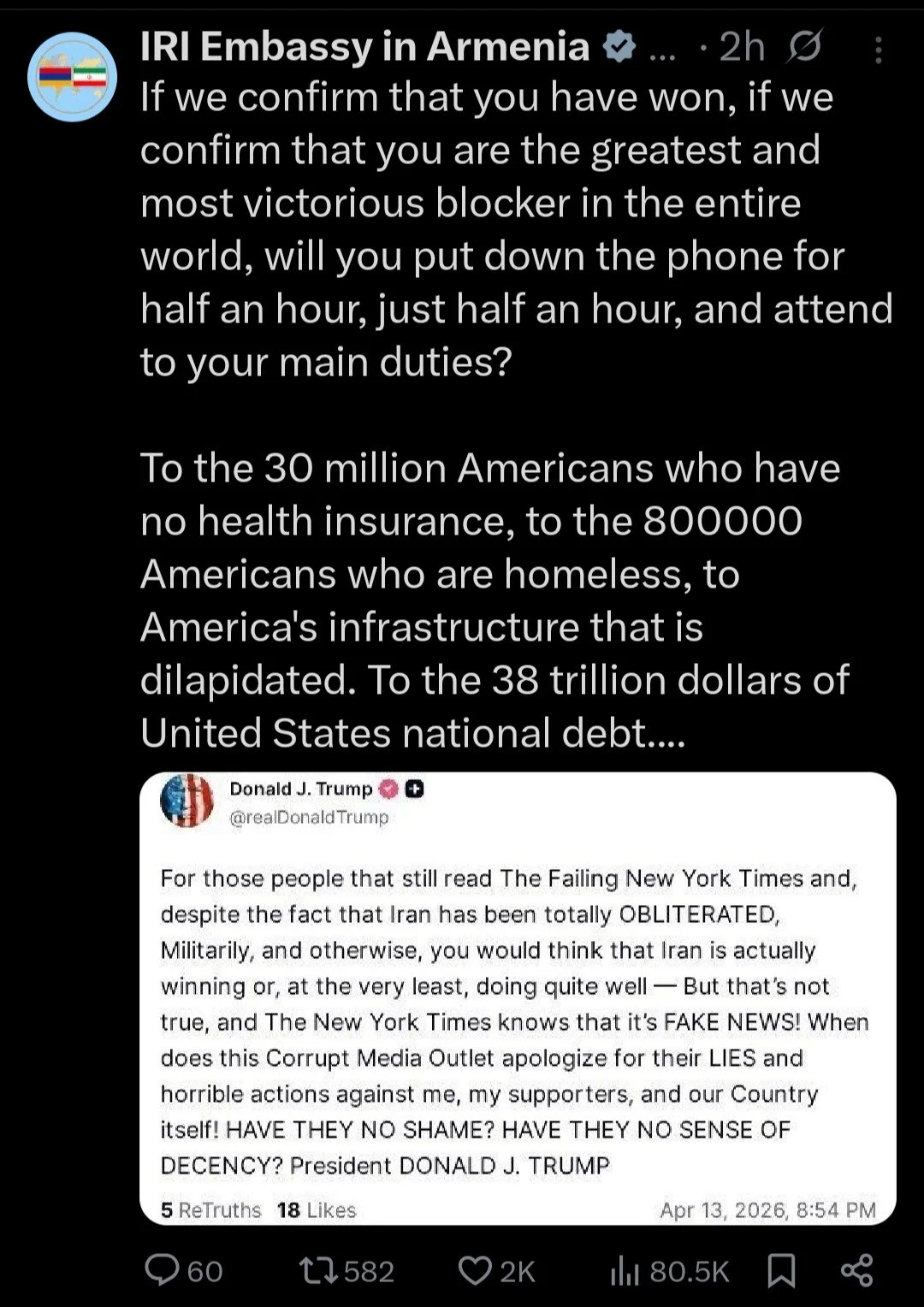
And then there are moments where the humour almost disappears and something sharper takes over. A message asking the President to put down his phone for half an hour and focus on real issues, healthcare, homelessness, infrastructure, debt. It reads less like a joke and more like a calm, almost clinical dismantling.
All of this is not random. It is not someone having fun on a social media handle. It is a very deliberate strategy.
Instead of matching noise with noise, they are undercutting it. Instead of reacting to every allegation, they are choosing not to take it seriously. They are making light of it. They are making light of him.
And in doing so, they are sending a much deeper message. They are projecting an image of a civilisation that has seen centuries, that has endured far greater challenges, and that is not shaken by what they are presenting as erratic, almost childish behaviour. The idea they are building is simple, we are not afraid, we are not rattled, and we are certainly not impressed.
At the same time, they are speaking directly to audiences beyond governments. They are reaching the American public, quietly reinforcing a narrative about how unpredictable their own leadership can be. They are reaching out to other countries, to allies of the United States, even to institutions like the Vatican, but always with a tone that shifts when required.
So while on one hand there is humour, sarcasm, even mockery, on the other hand there is a clear diplomatic line being communicated. That they do not seek conflict, that they are steady, that they are not reacting emotionally, and that they are willing to engage with the world in a tone that is far more nuanced than expected.
This approach was a gamble. It could easily have been seen as trivialising a serious situation, especially when lives are at stake. But instead, it has turned into something quite instructive.
It is, in many ways, a lesson in modern communication. A reminder that power is not only projected through force or aggression, but also through tone, through confidence, through the ability to remain composed and even humorous in the face of provocation.
More importantly, it is reshaping how Iran is being seen, a country that was often reduced to a single, rigid image of old men wielding immense power and control over people through religion, now suddenly appearing more layered, more aware, and surprisingly more relatable in the digital space.
This is what conflict looks like today. Not just missiles and statements, but narratives and perception. Not just what is said, but how it is said.
And perhaps the most interesting part of all this is that while one side shouts, the other laughs. And in today’s world, that laughter can sometimes carry a lot more weight.
While Trump Rants, Iran Roasts